
Collecting
Buying Your First Vintage Watch
Look beyond the name on the dial. A practical guide to choosing a piece that fits your wrist, your taste, and a budget that's actually yours.
4 min read
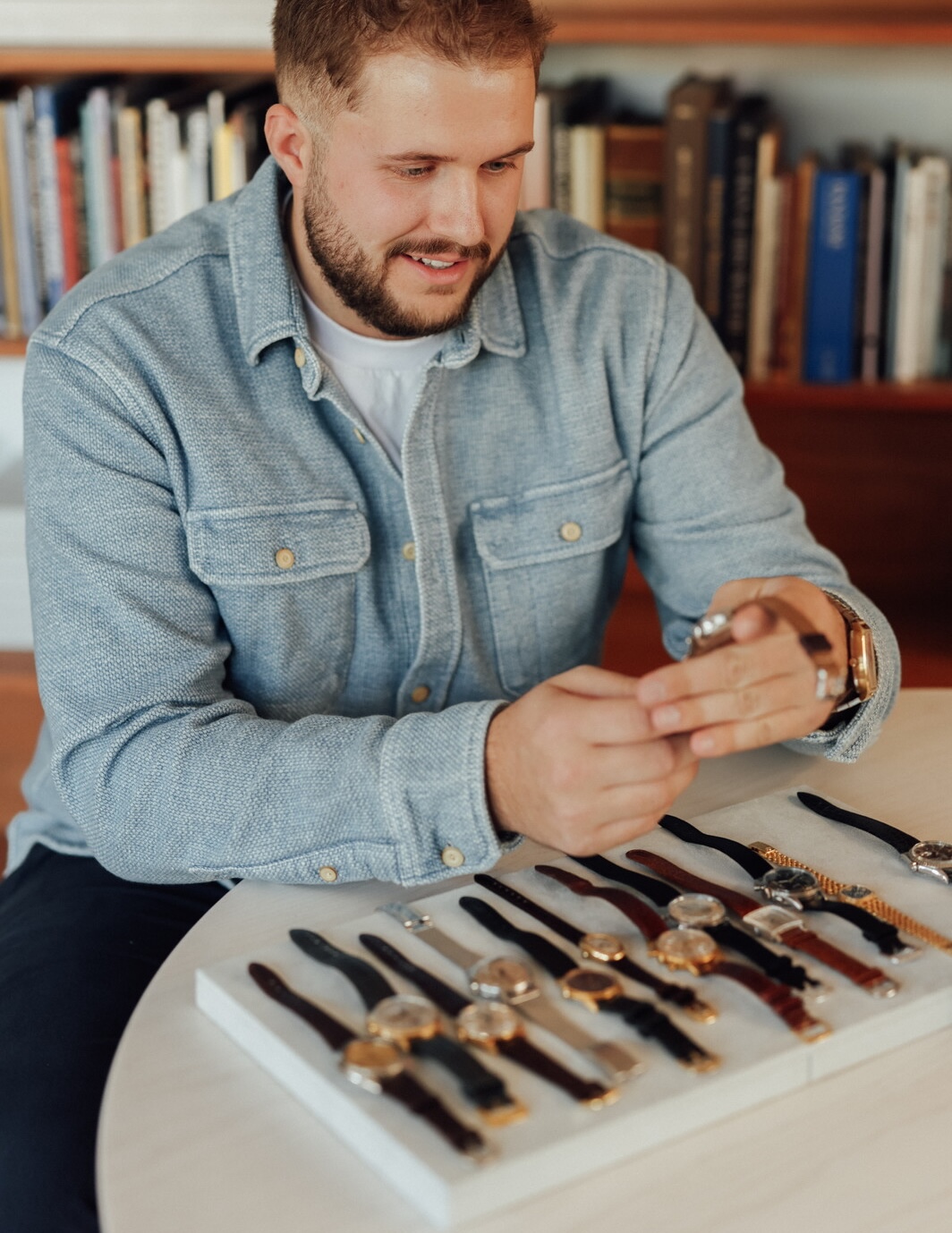
The first vintage watch is rarely the right one. Most collectors look back at theirs and see all the things they didn't yet know to look for. A thoughtful first purchase avoids the worst of those regrets.
Start with how it wears, not what it says
Before brand, before reference, before story, comes fit. A 39mm dress watch on a 6.25-inch wrist sits very differently than on a 7.75-inch wrist. Lug-to-lug matters more than diameter. A watch you don't reach for is a worse buy than a "lesser" one you wear every day.
Try things on in person if you can. If you can't, ask for a wrist shot on a wrist roughly the size of yours. Most dealers will do their best to provide one.
Originality and era-correct details
What matters most in a vintage watch is honesty: the right parts for the right era, finished the way they would have left the factory. "All original" is a phrase that sells well online, but it's often more myth than fact. These watches were built to be worn for decades, and decades of wear means the occasional mainspring, crystal, or gasket has been swapped along the way. That's maintenance, not compromise. A tired-but-honest dial almost always beats a refinished one. A sharp, unpolished case with original chamfers is worth more than a heavily polished one. Patina is the fingerprint of time, and it's also what the next collector will look for when you eventually move the watch on.
Look beyond the name on the dial
Rolex, Omega, and Cartier deserve their reputations and command prices to match. What many first-time buyers don't realize is that the same Swiss movements powering some of the most celebrated vintage chronographs (Valjoux, Venus, Lemania) also powered watches from brands you've never heard of, often at a fraction of the price.
Universal Genève, Wittnauer, Gallet, Heuer, Movado, Longines, Zodiac. The list of brands making genuinely excellent watches in the 1950s through 1970s is long. A well-chosen Universal Genève Polerouter or Wittnauer chronograph punches well above its sticker price. Not every great watch has a coronet on the dial.
A budget you can actually live with
Vintage watches need service. Plan for it. Servicing a mechanical watch is a careful undertaking: hours of skilled labor, specialist tools, and parts that often have to be tracked down. It comes with a real cost. If a watch has been sitting in a drawer for a decade, assume it needs work. Build that into your budget from day one and you'll never feel ambushed by it.
Rule of thumb: if a watch is at the absolute top of your budget and a service would push you over, it's the wrong watch. Find one a step down and own it comfortably.
Have Questions?
Looking for your first watch?
We're glad to talk through what might fit, in person in Boulder or by phone, no pressure.